
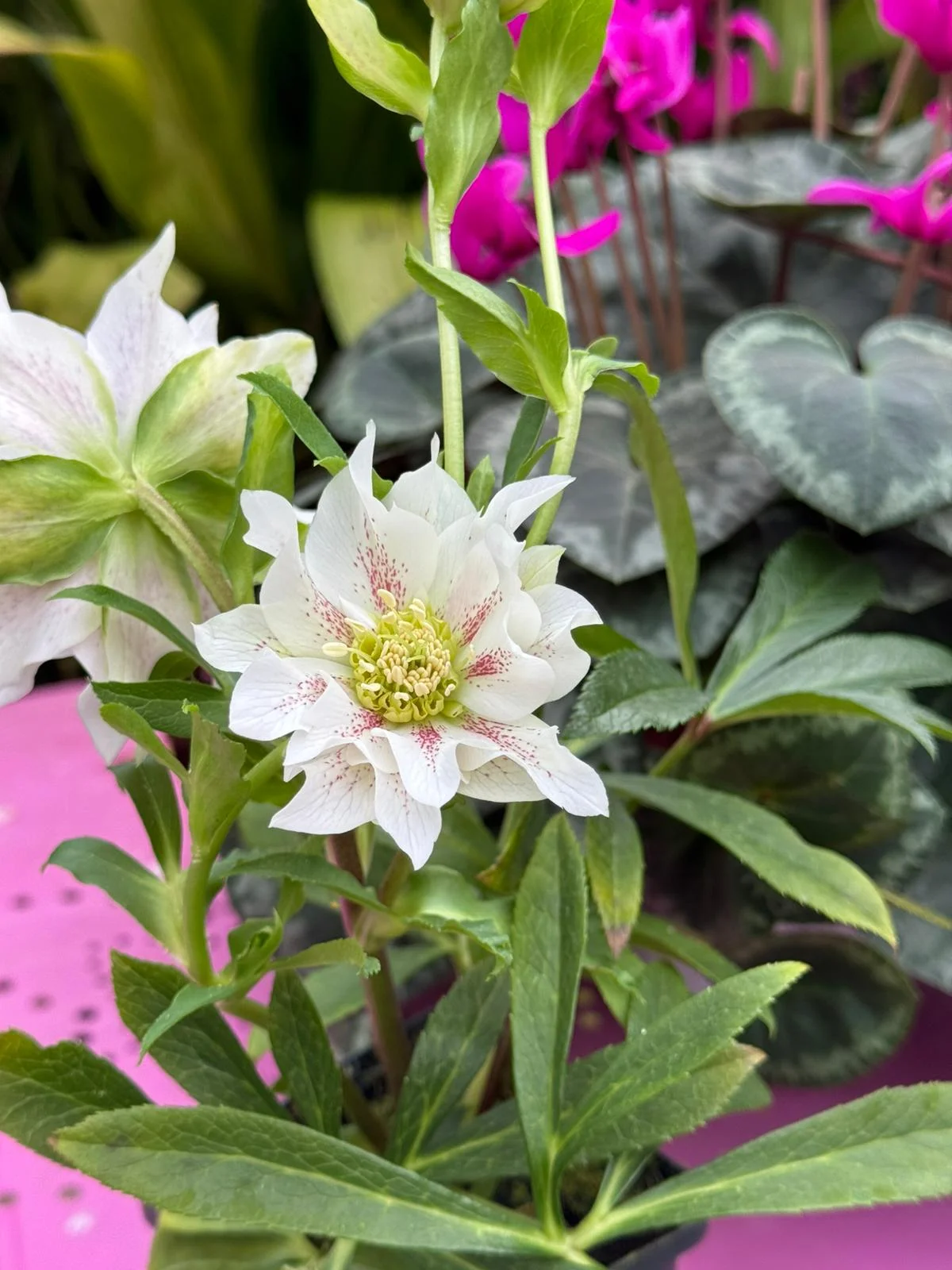
Hellebores are having a real revival, and it couldn’t be better timed. As gardens sit in the late-winter lull, these tough, elegant perennials are shimmying into the spotlight once again. Search interest always rises around February, when many other plants are still dormant and gardeners are hungry for colour. With new breeding bringing clearer colours, stronger plants and longer flowering periods, hellebores are no longer just a background plant for shady corners!!
Among the ranges drawing attention this year is the new Helleborus collection from Morel. Known for careful, long-term breeding work, Morel has introduced plants with strong garden performance – not to mention great visual appeal – making them a smart choice for gardeners.
Don’t be helleboring… read on to find out about what’s exciting in the world of hellebores.

Why hellebores deserve a place in modern gardens
Hellebores tick a lot of boxes for today’s gardens. They are hardy, evergreen perennials that cope well with cold weather and need very little fuss once established. Their leathery foliage provides structure all year, while their flowers appear when little else is in bloom.
They are also ideal for shadier spaces, which are often the trickiest parts of a garden to plant well. If you have an area under trees, along a north-facing wall or in dappled shade, hellebores will usually be far happier than sun-loving perennials.
The Morel range builds on these natural strengths. The plants are bred to be robust, floriferous and reliable, offering a long flowering window from autumn through to spring depending on the type. That extended season means you get more weeks of interest from a single plant – excellent value in both pots and borders.


When do hellebores flower?
One of the joys of hellebores is that different types flower at different points through the colder months.
Helleborus niger, often called the Christmas rose, is one of the earliest. In good conditions it can start flowering from late autumn into early winter, with elegant white blooms that look particularly striking in pots by doorways or on patios.
From midwinter into late winter, Helleborus orientalis and its hybrids take over. These are the classic Lenten roses, and they offer an impressive range of colours, from soft whites and yellows to deep reds, purples and spotted forms. Many of the newer double-flowered varieties add extra detail and fullness.
Morel also works with other species and hybrids such as argutifolius, foetidus, lividus and sternii. These bring varied foliage shapes and textures, as well as excellent resilience, helping gardens look lively even when flowers are sparse.

When to buy hellebores
February is one of the best times to buy hellebores. Plants are usually in flower at garden centres and nurseries, so you can see exactly what you’re getting in terms of colour and form. This is particularly helpful with orientalis types, where seedlings can vary.
Look for:
- Plenty of buds as well as open flowers
- Firm, healthy leaves with no black spots or mushy stems
- A well-rooted plant that isn’t sitting loose in its pot
Hellebores from modern breeding programmes like Morel’s are selected for uniformity and performance, so you’re more likely to get consistent plants that settle in quickly and flower well.

How to plant hellebores successfully
Hellebores prefer:
- Partial shade or dappled light
- Moist but well-drained soil
- Soil enriched with organic matter
Before planting, dig in compost or well-rotted leaf mould to improve soil structure. Although hellebores tolerate dry spells once established, they do best in soil that doesn’t completely dry out in summer.
Plant them at the same depth they were in the pot, firm in gently and water well. A mulch of compost or leaf mould in spring helps conserve moisture and feed the plant naturally.
Hellebores: Ongoing care and maintenance
Hellebores are often described as low maintenance, and that’s largely true, but a few simple jobs will keep them looking their best.
Remove old leaves in late winter
As new flower stems emerge, cut away the previous year’s tatty leaves at the base. This improves the view of the flowers and reduces the risk of fungal problems spreading from old foliage.
Water in dry spells during the first year
While established hellebores are fairly resilient, newly planted ones benefit from occasional watering in prolonged dry weather.
Feed lightly in spring
A general-purpose fertiliser or a top dressing of compost in early spring supports healthy growth and flowering for the following season.
Avoid disturbing them too often
Hellebores dislike being moved once settled. Choose their position carefully and allow them to form long-lived clumps.
A plant for the future as well as now
With their evergreen foliage, long flowering season and tolerance of shade, hellebores fit neatly into modern, climate-aware planting schemes. They provide colour and structure at a time of year when gardens can otherwise feel flat, and newer breeding such as Morel’s is making them more garden-worthy than ever.
If you’re looking for something to lift the garden in late winter and carry interest into spring with minimal effort, hellebores are well worth a fresh look this season.



Leave a Reply